Energy & Resource Management
Know Where Your Energy Goes. Line by Line, in Real Time.
Most factories manage energy with monthly utility bills and manual meter reads. By the time the waste shows up in a report, it has already cost you. UMH connects your meters, machines, and production data into one platform, so you can see consumption as it happens, trace it back to a specific line or product, and act before costs compound.
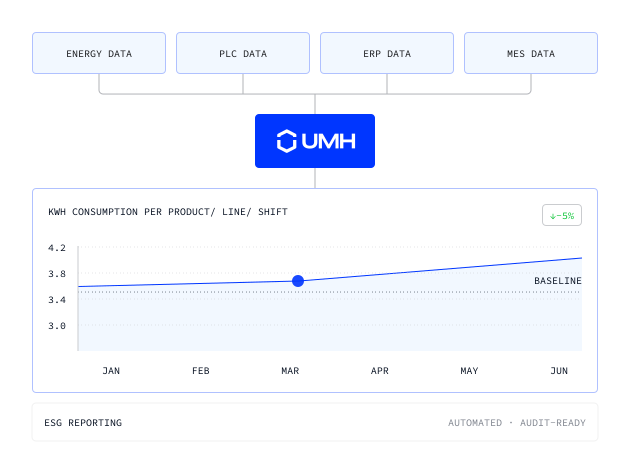

Energy per unit produced, calculated automatically from MES and machine data
Audit-ready data for ESG reporting and regulatory compliance (EnEfG, ISO 50001)
Real-time consumption tracking: electricity, gas, water, and compressed air
Asset-level benchmarking across machines, lines, and plants
Automated alerts when consumption deviates from expected levels
Open source, no per-tag licensing, no proprietary lock-in
Trusted by global enterprises










The Challenge
You have energy data. You just can't act on it.
The bill tells you the total. It tells you nothing else.
Monthly utility invoices show what a whole plant consumed in 30 days. They don't tell you which line is running above baseline, which shift consumes 20% more than the others, or which product variant costs three times as much energy to produce as the one next to it. That granularity exists in the machines. But without the right infrastructure connecting meters to production context, it never surfaces.
Energy data and production data live in different worlds.
Meters report to one system. PLCs report to another. The MES tracks orders and output. Nobody connects these streams, so calculating energy consumed per unit produced means exporting CSVs, aligning timestamps manually, and trusting that the shift report was filled in correctly. The insight is theoretically achievable. In practice, it never gets done. And without it, you're optimizing the wrong things.
The more lines you add, the harder the picture gets to hold.
A single plant with ten lines might have twenty-plus meters, multiple smart meter protocols, and a mix of Modbus, M-Bus, and BACnet devices that were installed by different contractors at different times. Each expansion that should make visibility easier adds another integration that doesn't connect to the ones before it. By the time energy management becomes a priority, the infrastructure is already fragmented and the project of making sense of it feels too big to start.
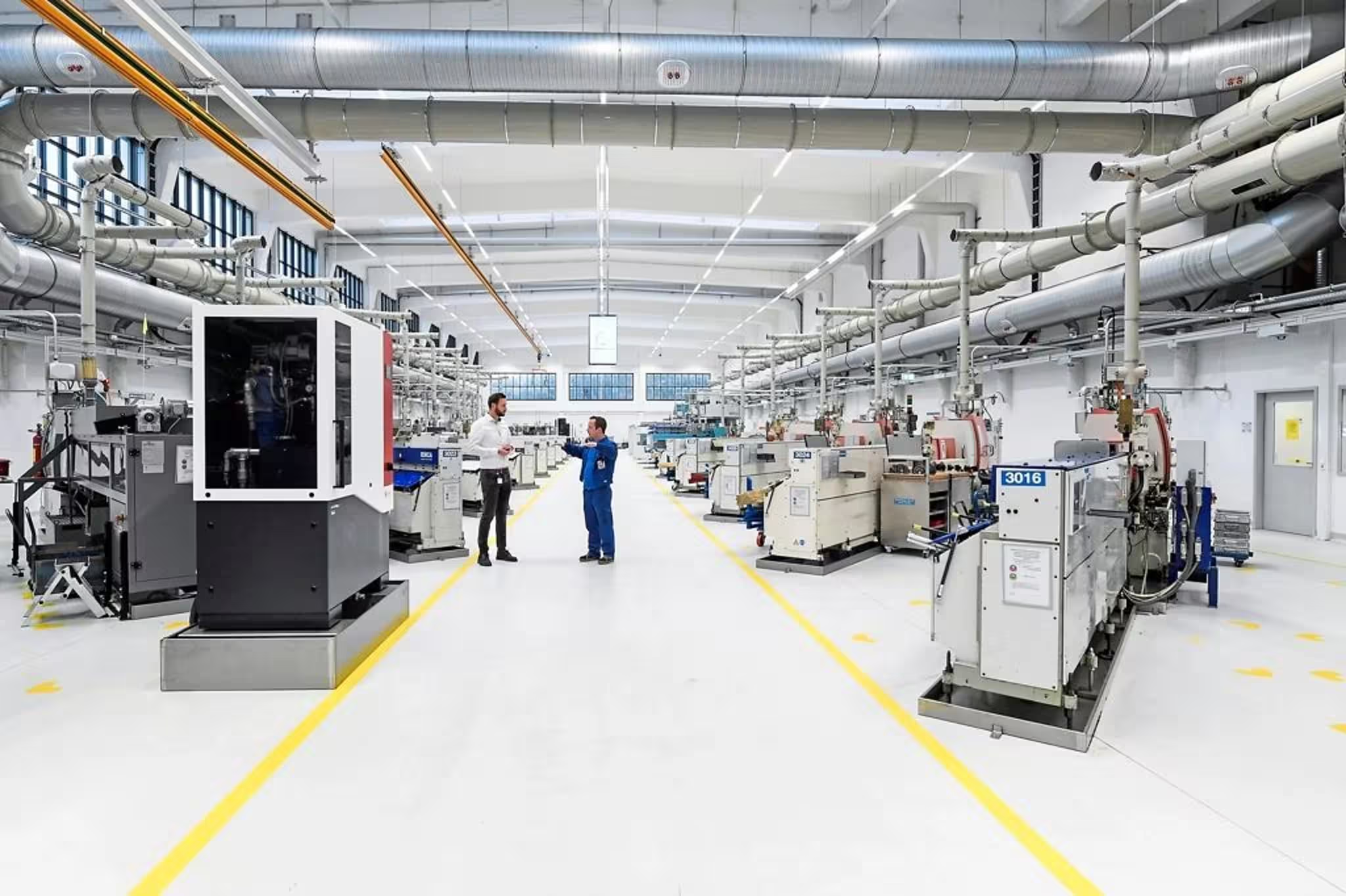
"We produce almost 20 million fasteners per day. That generates enormous amounts of data. Machine data, energy data, production orders. But it was all in separate systems. We had the data. We just couldn't use it."

Lutz Hermanns
Head of Processes, Digitalisation and Applications
Our solution
One platform connects your meters, your machines, and your production data.
UMH ingests data from all major meter protocols: M-Bus, Modbus, BACnet, OPC UA, alongside machine signals from PLCs and production records from your MES. Everything lands in the Unified Namespace and is stored in the open source historian. From there, Grafana dashboards give every role the view they actually need: operators see their line, energy managers see deviation alerts, plant directors see cross-site benchmarks. No custom integration project. No proprietary software layer sitting in the middle.

UMH connects to smart meters, power analyzers, and submetering devices over M-Bus, Modbus, BACnet, and OPC UA. Pre-configured Benthos and Node-RED connectors handle protocol translation out of the box. No custom integration code, no proprietary gateway required.
Connect every meter, fast
UMH combines energy readings with production order data from your MES. The result is energy consumed per unit produced, per product variant, per shift, calculated automatically. This is the number that drives real decisions. Everything else is overhead.
Energy cost tied to production output
Set consumption baselines per machine, line, or shift. UMH fires an alert the moment actual consumption drifts above threshold, in real time, not at the end of the month. Route alerts to Grafana, email, or Microsoft Teams. The right person gets notified before a minor anomaly becomes a major cost.
Deviation alerts before the waste compounds
All energy data is stored in the UMH historian, queryable, timestamped, and audit-ready. ESG reports, ISO 50001 documentation, and EnEfG compliance exports pull directly from the same data that drives your operational dashboards. No separate data collection effort. No reconciliation between systems.
Reporting that doesn't require a project
From disconnected meters to a live energy dashboard in four steps
Step
Connect your meters and machines
UMH ingests data from smart meters via M-Bus and Modbus, from PLCs via OPC UA or S7, and from any MQTT or REST source, without custom integration work.
step
•
TEXT
Connect your meters and machines
The format:
- 30 minutes to code.
- 15 minutes to discuss what you'd change to make it production-ready.
The format:
- 30 minutes to code.
- 15 minutes to discuss what you'd change to make it production-ready.
The format:
- 30 minutes to code.
- 15 minutes to discuss what you'd change to make it production-ready.
Step
Contextualize against production
Link consumption readings to production orders, machine states, and shift schedules from your MES, so energy data always has the production context needed to make it actionable.
step
•
TEXT
Contextualize against production
The format:
- 30 minutes to code.
- 15 minutes to discuss what you'd change to make it production-ready.
The format:
- 30 minutes to code.
- 15 minutes to discuss what you'd change to make it production-ready.
The format:
- 30 minutes to code.
- 15 minutes to discuss what you'd change to make it production-ready.
Step
Set baselines and alerts
Define expected consumption thresholds per asset, line, and shift. UMH detects and alerts on deviations in real time, before they accumulate into end-of-month surprises.
step
•
TEXT
Set baselines and alerts
The format:
- 30 minutes to code.
- 15 minutes to discuss what you'd change to make it production-ready.
The format:
- 30 minutes to code.
- 15 minutes to discuss what you'd change to make it production-ready.
The format:
- 30 minutes to code.
- 15 minutes to discuss what you'd change to make it production-ready.
Step
Visualize and report
Live dashboards show energy per unit produced, cross-line comparisons, and trend data. The same dataset feeds ESG reports and regulatory submissions automatically.
step
•
TEXT
Visualize and report
The format:
- 30 minutes to code.
- 15 minutes to discuss what you'd change to make it production-ready.
The format:
- 30 minutes to code.
- 15 minutes to discuss what you'd change to make it production-ready.
The format:
- 30 minutes to code.
- 15 minutes to discuss what you'd change to make it production-ready.
Frequently asked questions.
Does UMH work with the meters and protocols we already have on the floor?
We already have an energy management system. Does UMH replace it?
How long does it take to get our first energy dashboard live?
Can we use UMH to meet EnEfG or ISO 50001 reporting requirements?
Get the Energy & Resource Management one-pager
Share it with your team or take it into your next energy & resource management conversation with management.


START WITH UMH
Stop finding out about energy waste at the end of the month
Talk to our team about connecting your meters and machines to a single, real-time energy platform. Or explore it yourself, fully open source.