UMH Historian
Ask your site anything.
Keep your UNS data long-term, in the model you already defined. No second system needs to be built.

Trusted by global enterprises










The Problem
You have the data. Getting an answer is a project.
Did last week's setting change actually help to improve OEE? Did this process run the way it was supposed to?
To answer these questions, you need the history in place.
Rigid and inflexible
The historian owns its own asset model, separate from your UNS. The data is there, but reaching it takes time and manual effort.
Hard to maintain
A gateway, a database, a hand-written schema, queries rebuilt per project. Four things to keep in sync, and one person who knows how.
Doesn’t scale
Adding a new line means starting from scratch. A view built for one line doesn't work on the next, and the cost grows with every tag you connect.
Our solution
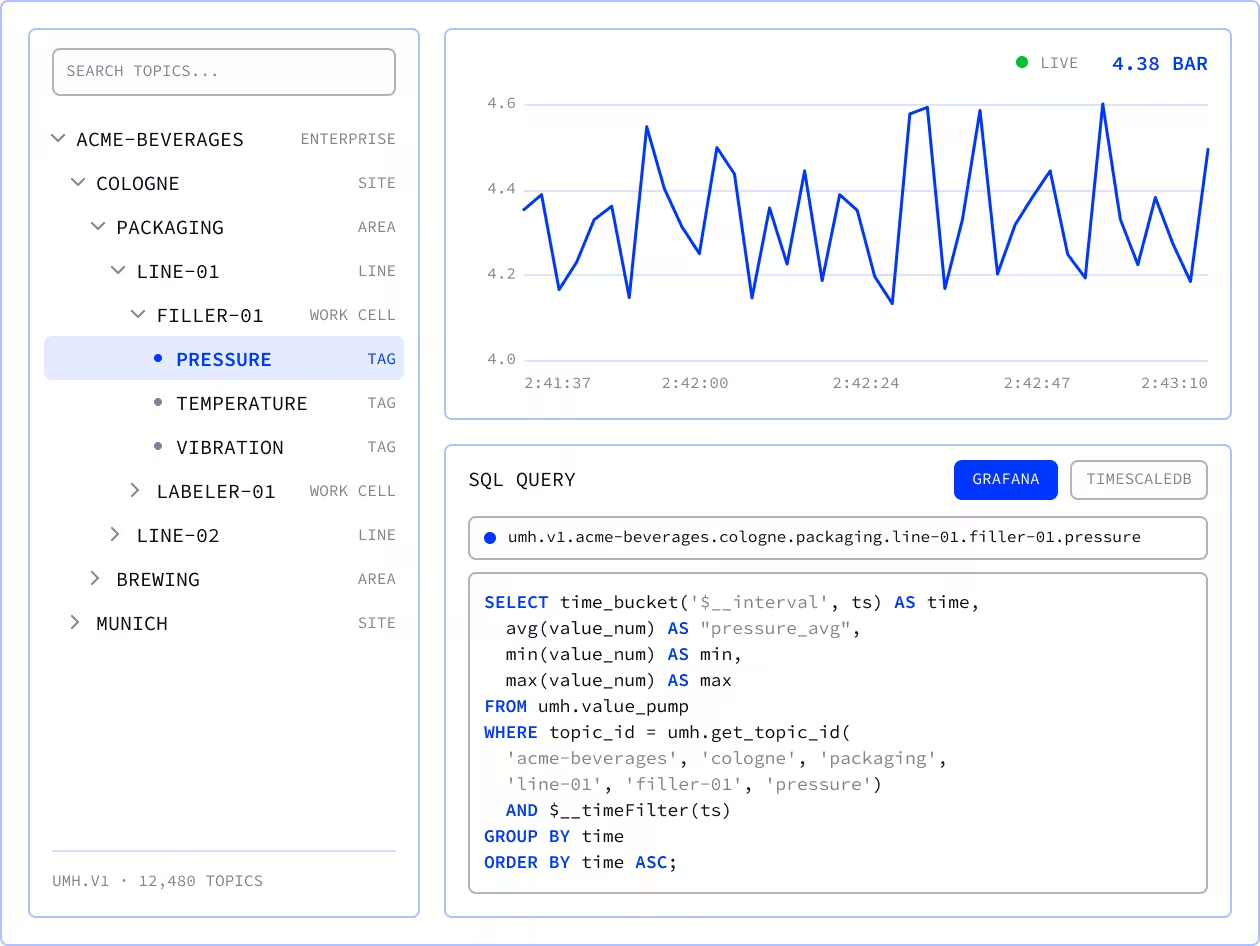
The model you already defined carries into history.
Dashboards, alerts and any statistical analysis all need to compare now against before. The UNS only carries the present. You need data from the past. That’s where UMH Historian comes in.
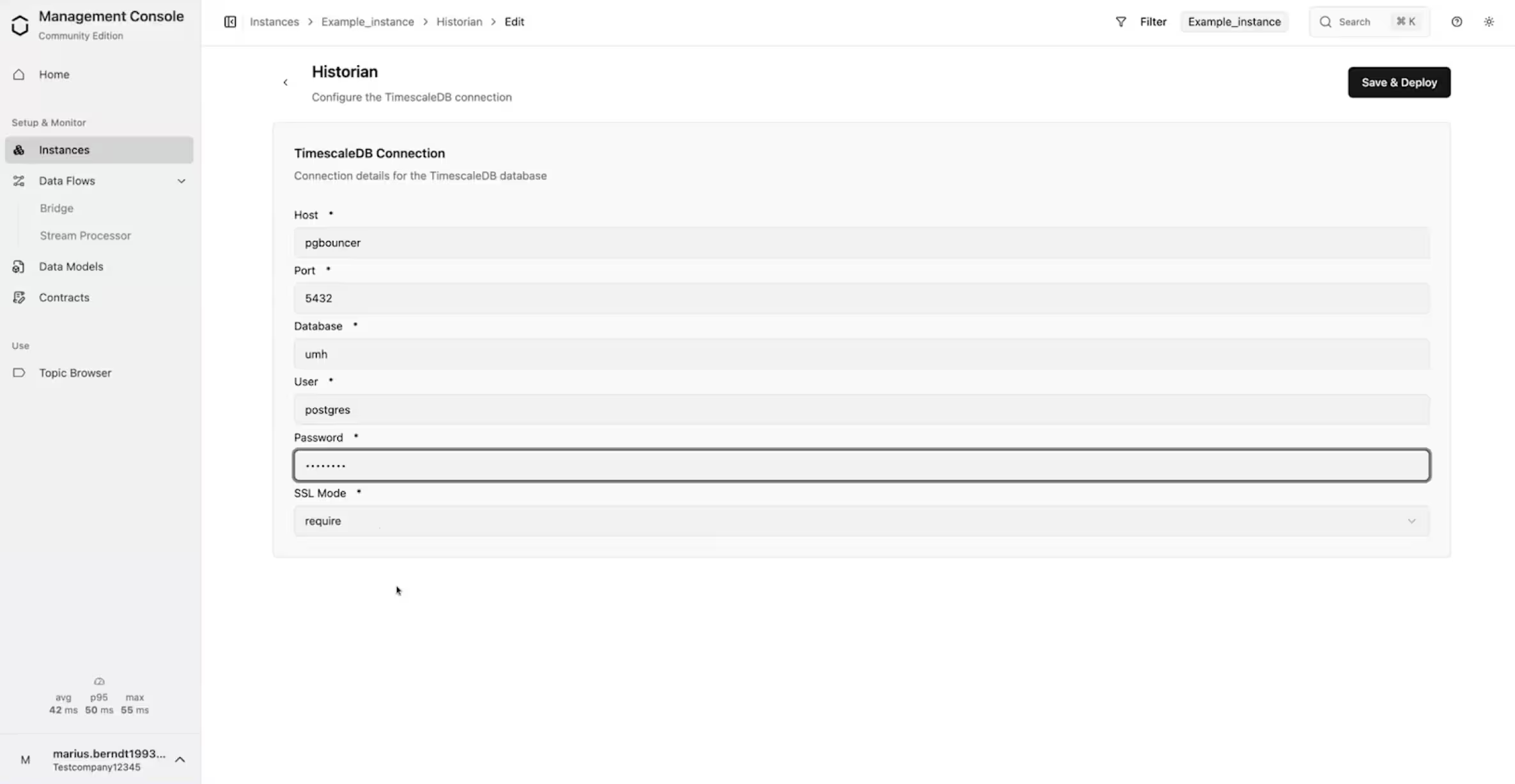
The Historian subscribes to the sources you’ve already defined in UMH Core. Dozens of standard connectors, with monitoring included.
Connect
Describe and model your site once. The data in the Historian mirrors the UNS structure exactly, so no separate configuration is needed.
Model
Downsampling is available in UMH Core. Compression and retention are configurable. Choose what data you want to keep and for how long.
Store
An automatic pipeline is generated into Timescale. Standard views and tables are available, so Grafana queries the hierarchy rather than raw tables.
Consume




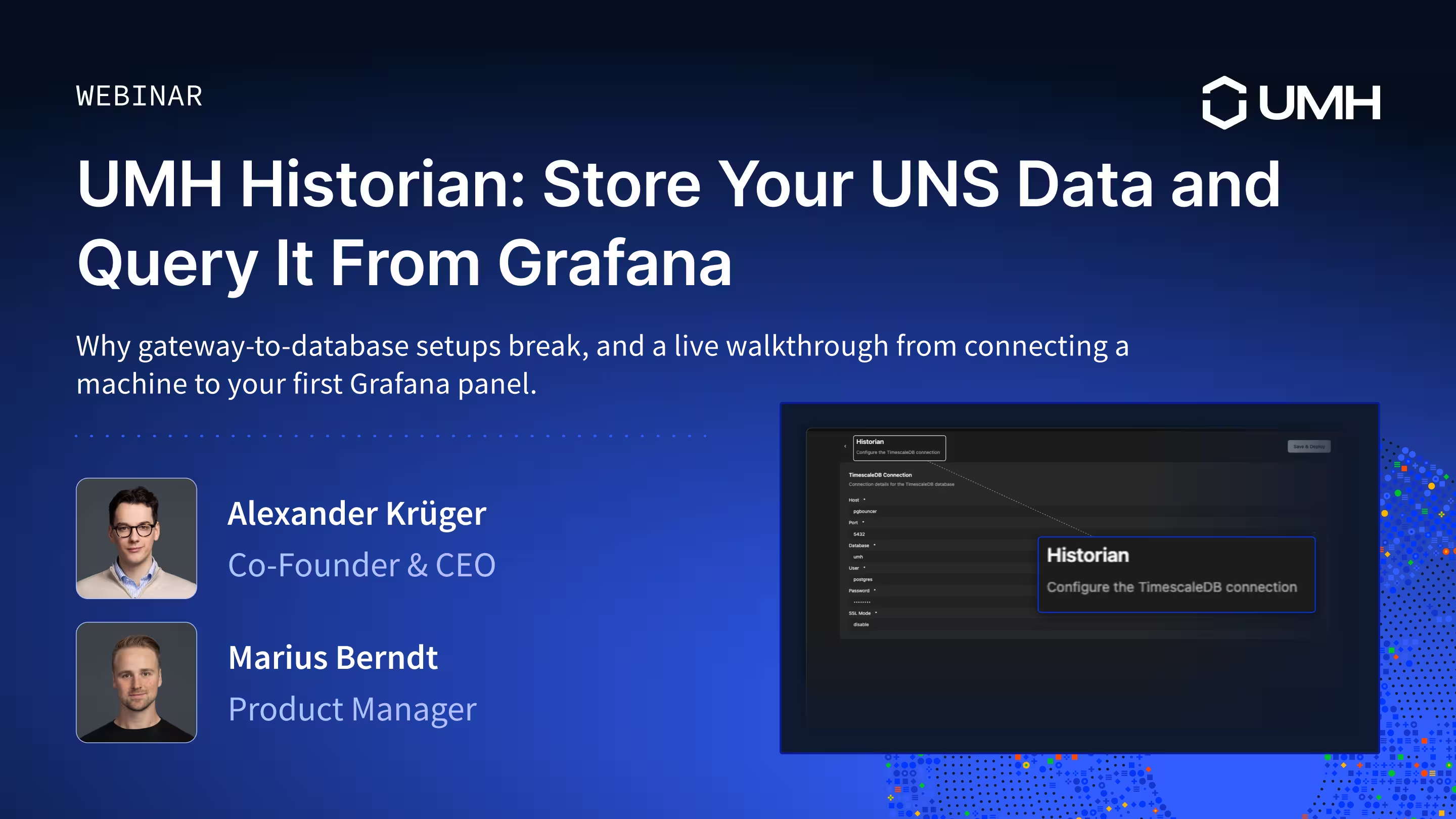
Webinar
UMH Historian: Store your UNS data and query it from Grafana
Why gateway-to-database setups break, and a live walkthrough from connecting a machine to your first Grafana panel.
Frequently asked questions.
How long is data stored, and can we control that?
Can we use our own Timescale and Grafana?
Do we have to use Grafana?
Who is this for, and who is it not for?
We already have AVEVA PI. Can we still use UMH Historian?
UMH Historian
Start using the data you already have
Talk to our team about your specific use case, or explore the platform yourself, fully open source.